


Words of Wonders: Crossword
Fugo Games
Words of Wonders: Crossword is the kind of word game I can open without preparing for a long session. It gives me a small letter wheel and a crossword-style board, then asks me to connect letters into words that fit the empty spaces. The setting adds a travel theme, so progress feels like moving through famous places rather than simply clearing a stack of unrelated puzzles. That combination makes it approachable for a first-time player while still giving experienced word-game fans a reason to keep looking for better answers.
Developed by Fugo Games, this free word game is available for everyone and supports devices running Android 8.0 or later. It has reached over 100 million installs and holds a 4.9 average from around 6.1 million ratings, which helps explain why it is so visible among mobile crossword games. Those figures do not replace personal experience, though. I found the main appeal in the short, repeatable puzzle loop: I can solve one board during a coffee break, stop, and return later without having to remember a complicated story or control scheme.
Getting from the first puzzle to a satisfying win
What the opening experience feels like
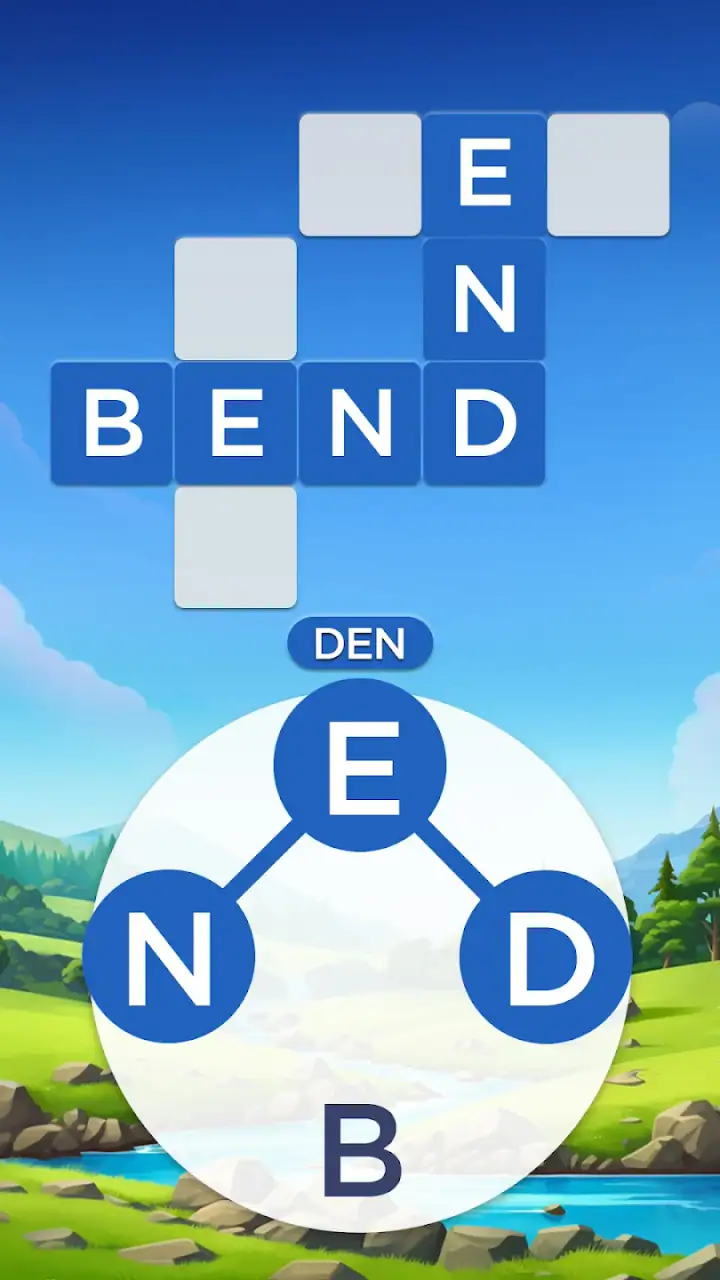
When I start Words of Wonders: Crossword, the basic idea is immediately readable. The board shows blank spaces, the available letters sit below it, and I form words by dragging across or connecting the letters in the right order. The early puzzles act as a gentle introduction because the possible answers are easier to recognize and the board gives enough guidance to keep the first few attempts moving.
Related News

Head Ball 2: The Arcade Soccer Sensation Redefining Mobile Sports

Head Ball 2: The Whimsical Soccer Showdown You Can't Miss

How Canva's Magic Resize Revolutionizes Multi-Platform Design
The travel presentation is more than a decorative sentence on the store page. It gives the game a sense of direction. Each solved group of words contributes to a broader journey through world wonders, so the small act of finding a word feels connected to visible progress. I prefer this to a completely plain list of crossword boards because the visual theme gives me a reason to continue after a puzzle that was only moderately challenging.
Still, this is not a traditional newspaper crossword with clues written as definitions. The letters are the main clue, and the crossing spaces gradually reveal which combinations are useful. If you enjoy vocabulary games based on deduction and rearrangement, the format should feel natural. If you specifically want cryptic clues, long-form clues, or a daily puzzle built around current events, this game may feel too simple.
Related News

Why WhatsApp Messenger Still Makes Everyday Communication Feel Easy

Jurassic World: The Game Is the Better Dino Tycoon for Strategic Players

Threads in Real Life: Who Should Join, Lurk, or Leave

How SHEIN Turned Shopping Into an Endless Content Feed

How to Make Fortnite Feel Smarter on Mobile

Should You Switch to Microsoft Outlook on Mobile?
A calm first setup
The initial setup is uncomplicated from a player’s point of view. I install the game, open it, and can move toward the first puzzle without learning a control system. The most important adjustment is mental rather than technical: I do not treat every available letter as something that must be used immediately. I first look for short, familiar words, then use the letters placed on the board to narrow down the longer possibilities.
That approach matters because the letter wheel can make the board appear more open than it really is. Several combinations may look plausible, but only some fit the crossing pattern. Instead of repeatedly dragging random sequences, I use the visible gaps as a filter. This turns the opening minutes into a manageable process: identify a likely word, place it, inspect the new letters, and repeat.
The game is free to download, with in-app purchases ranging from $0.99 to $99.99 per item. I would approach those purchases as optional conveniences rather than part of the basic reason to install it. A new player can first learn whether the puzzle rhythm is enjoyable without spending anything. That is especially sensible here because the core satisfaction comes from solving the board personally, not from reaching the next location as quickly as possible.
Gallery
Your first meaningful success
My first useful breakthrough usually comes when I stop searching for one perfect answer and start using the board as a conversation between words. Suppose a short word fills one section and reveals a letter at the crossing. That new letter can transform an uncertain longer pattern into something recognizable. The best early habit is therefore to place safe answers even when they do not complete the whole board.
There is also value in trying words that are not immediately required. When I spot a combination that uses several of the available letters, I test it even if I am unsure where it belongs. Finding an extra valid word can make the letter set feel less mysterious and may help me notice a pattern I had overlooked. I do not rely on this as a substitute for solving; I use it as a way to warm up my vocabulary and reduce tunnel vision.
The most reliable beginner tactic is to solve from the crossings outward, not from the letter wheel inward. In practice, I look for a blank group with a distinctive length or a newly exposed letter, build candidates around that information, and then return to the remaining spaces. This is more efficient than swiping every possible arrangement and is one of the small habits that makes the game feel less random.
Where new players can get confused
The biggest source of confusion is assuming that every word I can create must belong to the board. Word games often accept more combinations than the visible crossword needs, so a valid word may not immediately change the main puzzle. I treat those discoveries as useful side finds rather than evidence that I have made a mistake. The important question is whether the board has gained a letter or whether I have simply found an additional word.
Another point of friction is the difference between knowing a word and seeing its shape. I may recognize the right vocabulary but still fail to place it because I am looking at the letters in wheel order instead of considering the empty spaces. Rotating my attention from the available letters to the board usually solves that problem. I also try not to assume that the longest-looking answer is the next required one; a short crossing word can be the key to everything else.
Occasional difficulty is part of the appeal, but it can become tiring if I am playing while distracted. I would not recommend forcing myself through a board when I am no longer examining the letters carefully. A short break often works better than tapping through guesses. Since the puzzles are easy to resume, the game suits interrupted play, and there is little benefit in turning a relaxing word session into a test of patience.
How to use the journey without rushing it
Once the introductory boards become familiar, I suggest treating each puzzle as a small vocabulary workout rather than a race. I scan for common endings, repeated letters, and likely two- or three-letter structures. Then I place the answers that have the strongest fit and use the resulting crossings to test less obvious words. This workflow keeps the challenge focused on reasoning instead of luck.
A practical everyday scenario is a short wait before an appointment. I can open the game, complete part of a board, and put the phone away when my name is called. Later, the same board still feels understandable because the travel progression and unfinished spaces provide a clear return point. It is better suited to this kind of fragmented time than a game that expects a long uninterrupted match or demands that I remember a detailed narrative.
For language learners, the game can be useful as a light vocabulary prompt, but I would not describe it as a structured learning tool. It encourages recognition and recall, especially when a familiar word is hidden among less obvious arrangements. However, it does not replace lessons, dictionaries, or deliberate practice because the goal is solving the board rather than explaining every word. I see it as a playful supplement, not a course.
How it compares with other word games
Compared with a standard crossword app, this game places less emphasis on written clues and more on letter manipulation. That makes the entry point easier for someone who finds clue-heavy crosswords intimidating. It also means that players who love precise definitions, cultural references, or elaborate clue construction may find the experience less rich than a conventional crossword.
Compared with an anagram game, the crossword layout gives each answer more context. I am not merely making words from a pile of letters; I am watching them intersect and constrain one another. That extra structure is the main reason I prefer this format when I want a puzzle with a little more direction. On the other hand, an open anagram game may be better for someone who wants a completely free search with fewer board-based restrictions.
Compared with competitive word games, the experience feels more private and measured. I can concentrate on the board without worrying about an opponent’s timer or vocabulary. That is a strength for casual play, but it can also be a weakness if my motivation comes from head-to-head competition. People who need multiplayer pressure, live matches, or a strong social layer should look elsewhere rather than expecting this journey theme to provide the same energy.
Small strategies that make later boards smoother
One useful technique is to separate certainty from curiosity. I place words that clearly match the board first, then use the remaining letters for experiments. This prevents a speculative guess from distracting me from a nearly solved section. When I feel stuck, I also rebuild the letter set mentally by focusing on endings and beginnings rather than reading every letter in sequence.
A second technique is to use mistakes as pattern information. If a promising arrangement does not fit, I do not simply discard it; I ask which crossing letter made it impossible. That tells me whether the problem is the word itself or the assumption I made about the neighboring answer. This makes the game feel more like deduction and less like blind tapping.
A third trade-off concerns help. Assistance can get a board moving again, but using it too early removes the most rewarding part of the puzzle: the moment when several crossings suddenly make sense. I prefer to pause, try a different section, and return later before seeking help. Players who become frustrated by being stuck may appreciate the option of moving forward, while players who value a clean solve should use support sparingly.
Who will enjoy it, and who should skip it
I would recommend this game to people who like word puzzles but want short sessions, clear visual progress, and a softer alternative to competitive play. It is also a good choice for families looking for an everyone-rated game that is easy to explain. The travel theme gives younger or less experienced players an extra sense of progression, while the later word combinations can still make an experienced player slow down.
I would be more cautious about recommending it to someone who dislikes repeated puzzle structures. The basic interaction remains consistent: connect letters, fill crossings, and continue the journey. That consistency is comforting for me, but it may feel predictable to players who need changing mechanics. I would also steer serious crossword enthusiasts toward a clue-based alternative if their favorite part of the genre is interpreting nuanced definitions rather than arranging letters.
Another consideration is patience with optional spending. The game is free, but the presence of purchases means I would not install it expecting every possible convenience to be part of the no-cost experience. My advice is simple: play enough boards to decide whether the central loop works for you, and only then consider whether any optional purchase fits your habits. There is no reason to spend merely because a difficult board interrupts your progress.
What I would do after installing it today
I would begin with a quiet first session rather than trying to clear a large stretch of the journey. I would learn the gesture, solve the obvious short words, and pay attention to how the crossings guide the next choices. After that, I would deliberately search for an extra word or two, because doing so teaches how flexible the letter set can be without making the main board feel confusing.
On the next session, I would use the board-first method: find the most distinctive blank pattern, fill the safest answer, and let the new crossing letters reduce the possibilities. If I became stuck, I would leave the game for a few minutes instead of guessing quickly. This is one of those puzzles where a fresh look is often more useful than persistence without a plan.
The current version is 5.5.3, and the game has been available since April 10, 2018. Those details place it firmly in the established mobile word-game space rather than making it feel like an untested newcomer. My overall impression is positive because the design understands what makes a short puzzle session satisfying: simple controls, visible progress, and enough uncertainty to make the next answer feel earned.
In the end, I see Words of Wonders: Crossword as a friendly, accessible word game rather than a demanding crossword simulator. Its strongest qualities are the guided journey, the approachable letter-linking system, and the way a few solved crossings can unlock an entire board. Its limits are equally clear: the format may become repetitive, clue enthusiasts may want more depth, and competitive players may miss direct opponents. If you want a calm game for filling spare minutes while exercising your vocabulary, I think it is worth trying. Start slowly, let the crossings do the heavy lifting, and judge it by how satisfying those first genuine solves feel.
FAQs for Words of Wonders: Crossword
What is Words of Wonders: Crossword about?
Words of Wonders: Crossword is a word puzzle game that challenges players to expand their vocabulary and explore amazing locations worldwide. The gameplay involves solving crossword puzzles by finding hidden words from a set of given letters, unlocking new levels, and discovering iconic landmarks along the journey.
Is Words of Wonders: Crossword available for both Android and iOS devices?
Yes, Words of Wonders: Crossword is available for download on both Android and iOS platforms. Users can find the app on the Google Play Store for Android devices and the Apple App Store for iOS devices, making it accessible to a wide range of users who enjoy word puzzle games.
Are there in-app purchases in Words of Wonders: Crossword?
Words of Wonders: Crossword is free to download and play, but it does offer in-app purchases. These purchases can enhance the gaming experience by providing additional hints or removing ads. Players can enjoy the full game without spending money, but these options offer added convenience and features.
Does Words of Wonders: Crossword require an internet connection to play?
Words of Wonders: Crossword can be played offline, allowing users to enjoy the game without an internet connection. This feature makes it perfect for playing on-the-go, whether you're traveling, commuting, or simply in a location with limited internet access. However, some features might require occasional connectivity.
How does Words of Wonders: Crossword enhance vocabulary skills?
Words of Wonders: Crossword enhances vocabulary skills by challenging players to discover and form words from a limited set of letters. As players progress through levels, they encounter increasingly complex puzzles that require creative thinking and a broader vocabulary, making it an educational and entertaining experience.
Pros
- Engaging word puzzles enhance vocabulary.
- Beautiful graphics and calming music.
- Regular updates with new levels.
- Offline play available for on-the-go fun.
- Challenging enough for all age groups.
Cons
- In-app purchases can be pricey.
- Some ads are intrusive and frequent.
- Occasional glitches in level progression.
- Hints can run out too quickly.
- Limited language options for non-English speakers.


